Your Minimum temperature to pour concrete slab images are ready. Minimum temperature to pour concrete slab are a topic that is being searched for and liked by netizens now. You can Download the Minimum temperature to pour concrete slab files here. Download all royalty-free photos and vectors.
If you’re searching for minimum temperature to pour concrete slab pictures information related to the minimum temperature to pour concrete slab interest, you have visit the right site. Our site frequently gives you hints for refferencing the maximum quality video and picture content, please kindly hunt and locate more informative video articles and graphics that fit your interests.
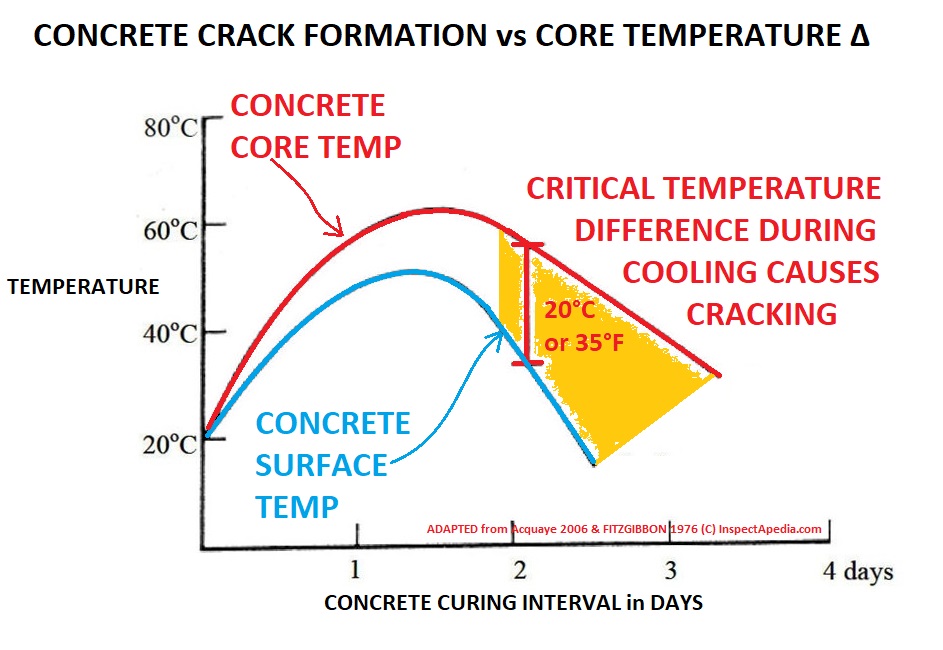
Minimum Temperature To Pour Concrete Slab. Some people in our office say we should specify a maximum permissible concrete temperature of 90 ºF 32 ºC. 900-1800 mm 72 in. For temperatures greater than 35C the use of ice-cold water is recommended to prevent formation of cracks at early stages. But a concrete foundation or other structure that will carry high loads at an early age requires 20 days or.
 What Is The Minimum Depth For A Concrete Slab Quora From quora.com
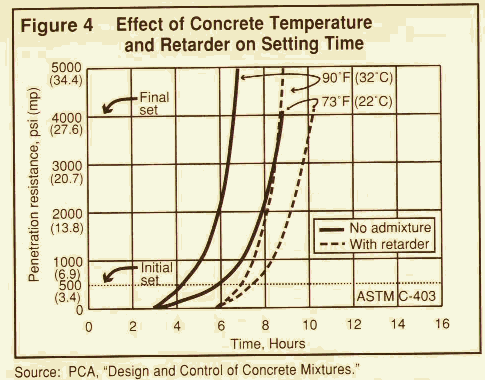
Even when daytime temperatures are within the satisfactory range winter concrete setting creates risks that could result in weak inadequate concrete. The concrete temperature cannot drop more than 40 Fahrenheit in 24 hours. In order to avoid these issues its advised to pour concrete at a temperature between 50 to 60F. The necessary chemical reactions that set and strengthen concrete slow significantly below 50 F and are almost non-existent below 40 F. The ideal temperature to pour concrete is between 10C and 15C 50F and 60F. Others say a temperature higher than 90 ºF 32 ºC is allowable if the concrete contains a set-retarding admixture.
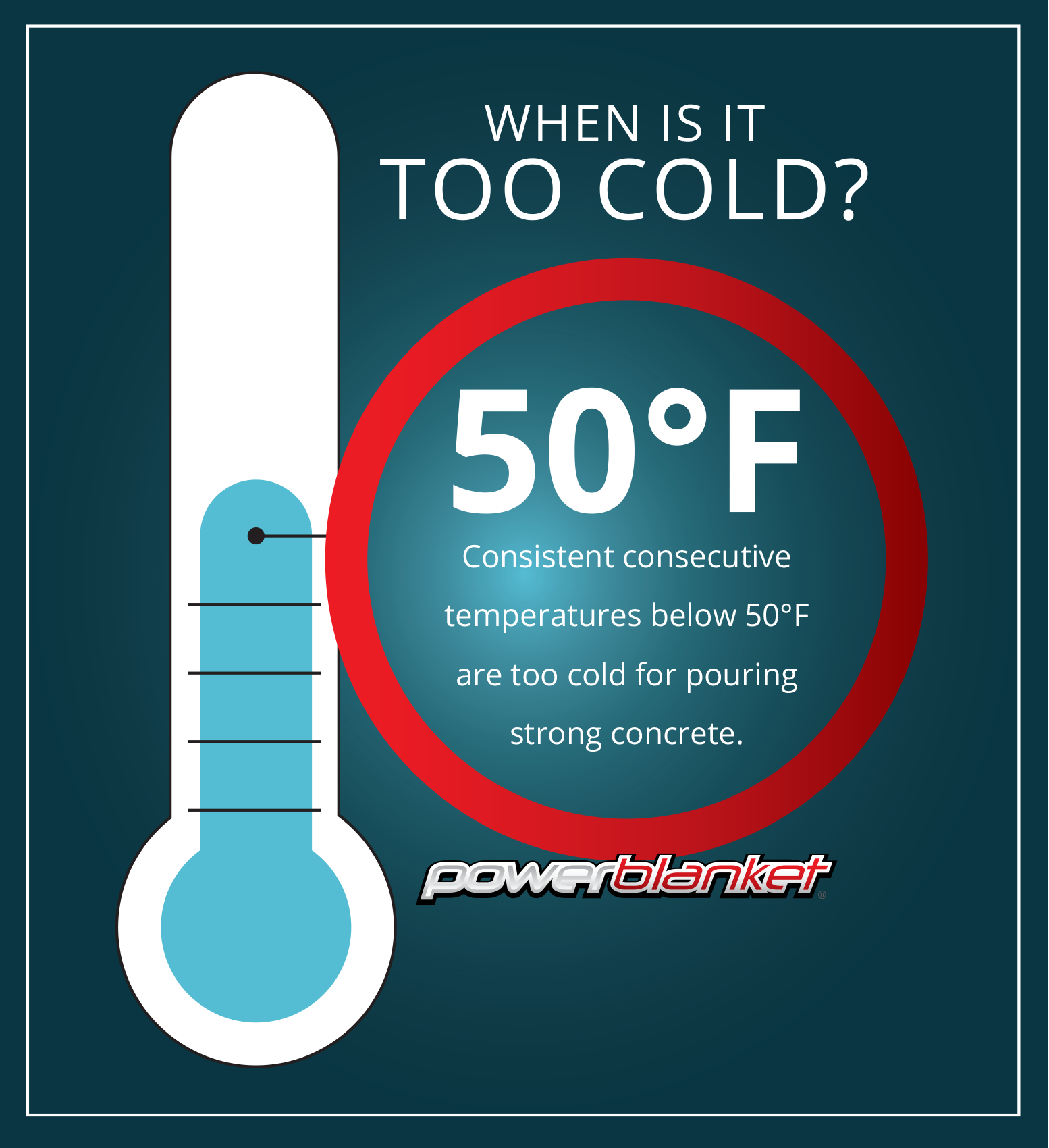
Temperatures below 50F will begin to slow the curing process and the water in the cement is at risk of freezing at temperatures below 40F.
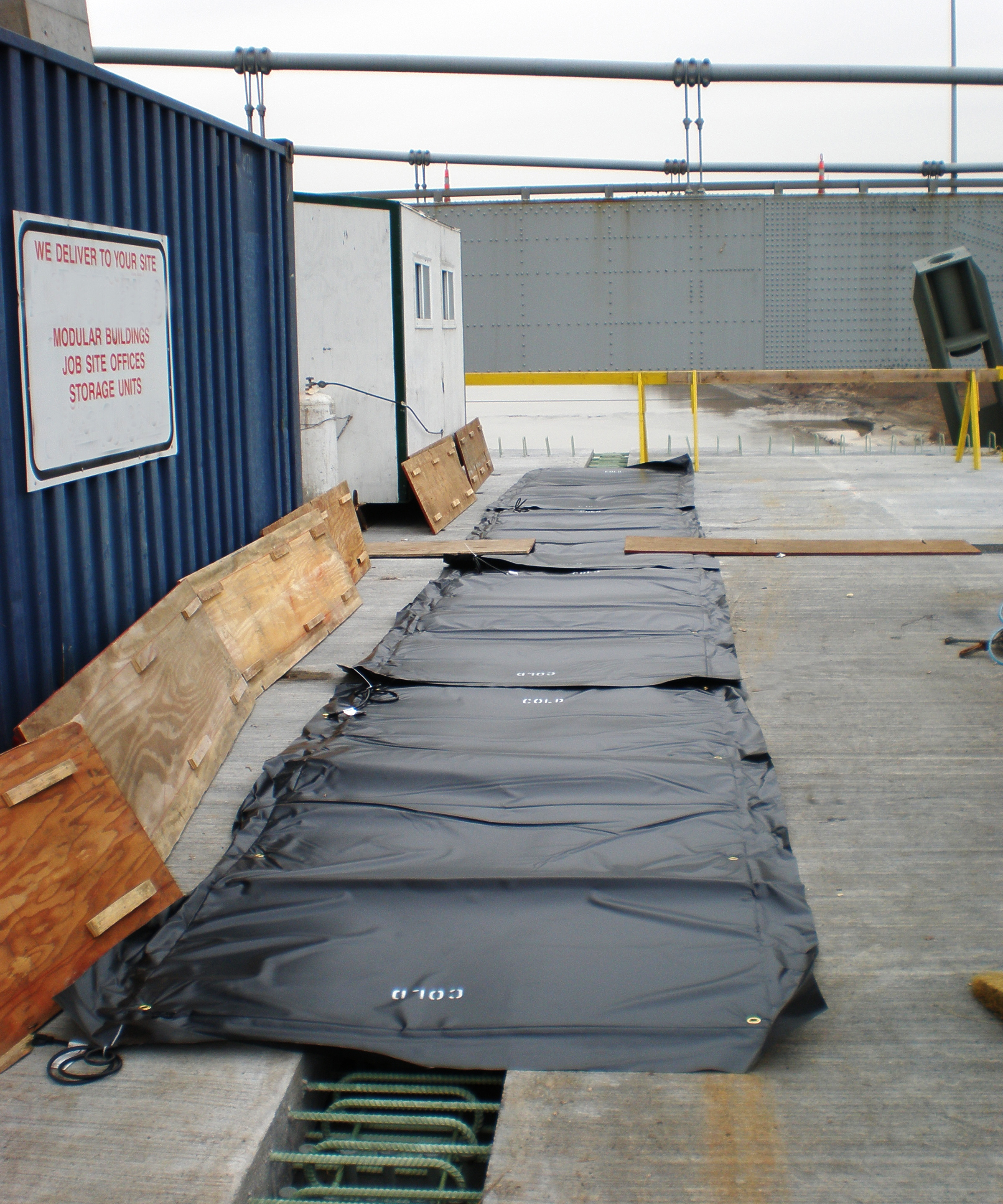
The concrete temperature cannot drop more than 40 Fahrenheit in 24 hours. Others say a temperature higher than 90 ºF 32 ºC is allowable if the concrete contains a set-retarding admixture. The period can be reduced to 3 days if high early strength concrete is used and the temperature is above 10º C 50º F. Maintain the concrete temperature above 40 degrees Fahrenheit for at least four more days after the use of the insulation blankets or heated enclosures. For temperatures greater than 35C the use of ice-cold water is recommended to prevent formation of cracks at early stages. Mm 12 in.
 Source: canzac.com
Local contractors are ready to help. Maintain the concrete temperature above 40 degrees Fahrenheit for at least four more days after the use of the insulation blankets or heated enclosures. The American Concrete Institute ACI ACI 306R-10 has stated that cold weather exists when the air temperature has fallen to or is expected to fall below 40F 5C during the protection period. Temperatures below 50F will begin to slow the curing process and the water in the cement is at risk of freezing at temperatures below 40F. First lets define cold weather with respect to pouring concrete.
 Source: pinterest.com
Mm 12 in. The period can be reduced to 3 days if high early strength concrete is used and the temperature is above 10º C 50º F. When there is no other option adding a cement bag to the mix will help. But first lets step back and look at how temperature affects pouring concrete. The Ideal Temperature for Pouring Concrete.
 Source: lceted.com
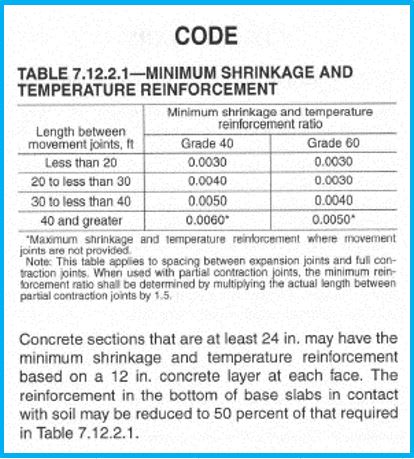
Pouring concrete in cold weather will have a detrimental affect on concrete. For high-early strength concrete that wont be exposed to freeze-thaw cycles one day at temperatures above 40 degrees is sufficient. 1800 mm Air temperature Minimum concrete temperature as placed and maintained 55 F 13 C 50 F 10 C 45 7 C 40 F 5 C Minimum concrete temperature as mixed for indicated air temperature. Maintain the concrete temperature above 40 degrees Fahrenheit for at least four more days after the use of the insulation blankets or heated enclosures. In order to avoid these issues its advised to pour concrete at a temperature between 50 to 60F.
 Source: powerblanket.com
The period can be reduced to 3 days if high early strength concrete is used and the temperature is above 10º C 50º F. Mm 12 in. If concrete curing temperatures are below freezing the water inside the concrete can freeze and expand resulting in cracks. Ad Need help with cement work. What defines cold weather for concrete.
 Source: pinterest.com
Mm 12 in. Any time you have three consecutive days where the average daily temperature is less than 40F or if the temperature is lower than 50F for less than half of any of the three daysthat is undesirably cold for concrete. The current American Concrete Institute ACI definition of cold-weather concreting as stated in ACI 306 is a period when for more than three successive days the average daily air temperature drops below 40 degrees Fahrenheit and stays below 50 degrees Fahrenheit for more than one-half of any 24 hour period. Others say a temperature higher than 90 ºF 32 ºC is allowable if the concrete contains a set-retarding admixture. When the temperature drops below 10C the chemical reactions needed to set and strengthen concrete slow down significantly.
 Source: pinterest.com
Even when daytime temperatures are within the satisfactory range winter concrete setting creates risks that could result in weak inadequate concrete. First lets define cold weather with respect to pouring concrete. Some people in our office say we should specify a maximum permissible concrete temperature of 90 ºF 32 ºC. The ideal temperature to pour concrete is between 10C and 15C 50F and 60F. The ideal temperature range for pouring concrete is 40 to 60 degrees over a 24-hour period.
 Source: pinterest.com
When the temperature drops below 10C the chemical reactions needed to set and strengthen concrete slow down significantly. Mm 12 in. Experts agree that the best temperature to pour concrete is between 50-60 F. The ideal temperature to pour concrete is between 10C and 15C 50F and 60F. Maintain the concrete temperature above 40 degrees Fahrenheit for at least four more days after the use of the insulation blankets or heated enclosures.
 Source: eng-tips.com
900-1800 mm 72 in. Between 40 and 60 allows the water to slowly evaporate from the concrete but is not cold enough to slow down the chemical process of curing. The best time to pour concrete is when temperatures are expected to remain above 50 degrees for five to seven days but plans can go awry with the arrival of. The current American Concrete Institute ACI definition of cold-weather concreting as stated in ACI 306 is a period when for more than three successive days the average daily air temperature drops below 40 degrees Fahrenheit and stays below 50 degrees Fahrenheit for more than one-half of any 24 hour period. Experts agree that the best temperature to pour concrete is between 50-60 F.
 Source: pinterest.com
300-900 mm 36-72 in. The concrete temperature cannot drop more than 40 Fahrenheit in 24 hours. For most concrete structures the curing period at temperatures above 5º C 40º F should be a minimum of 7 days or until 70 of the specified compressive or flexural strength is attained. 1800 mm Air temperature Minimum concrete temperature as placed and maintained 55 F 13 C 50 F 10 C 45 7 C 40 F 5 C Minimum concrete temperature as mixed for indicated air temperature. Any time you have three consecutive days where the average daily temperature is less than 40F or if the temperature is lower than 50F for less than half of any of the three daysthat is undesirably cold for concrete.
 Source: powerblanket.com
Even when daytime temperatures are within the satisfactory range winter concrete setting creates risks that could result in weak inadequate concrete. Any time you have three consecutive days where the average daily temperature is less than 40F or if the temperature is lower than 50F for less than half of any of the three daysthat is undesirably cold for concrete. The ideal temperature range for pouring concrete is 40 to 60 degrees over a 24-hour period. If concrete curing temperatures are below freezing the water inside the concrete can freeze and expand resulting in cracks. In hot weather conditions AS 1379 requires that concrete temperatures at the point of delivery shall be within a range of 5C to 35C.
 Source: inspectapedia.com
The ideal temperature to pour concrete is between 10C and 15C 50F and 60F. Concrete Temperature Requirements Section size minimum dimension in. The American Concrete Institute ACI ACI 306R-10 has stated that cold weather exists when the air temperature has fallen to or is expected to fall below 40F 5C during the protection period. If concrete curing temperatures are below freezing the water inside the concrete can freeze and expand resulting in cracks. Between 40 and 60 allows the water to slowly evaporate from the concrete but is not cold enough to slow down the chemical process of curing.
 Source: engr.psu.edu
While its feasible to install concrete above 60 degrees its normally not a good idea to install in temperatures below 40. When the temperature drops below 10C the chemical reactions needed to set and strengthen concrete slow down significantly. Even when daytime temperatures are within the satisfactory range winter concrete setting creates risks that could result in weak inadequate concrete. Local contractors are ready to help. But a concrete foundation or other structure that will carry high loads at an early age requires 20 days or.
 Source: civilmdc.com
At the same time concrete poured in freezing temperatures can develop cracks as water in the mixture freezes and expands. Table 1 - Recommended concrete temperatures Section Size minimum dimension. If concrete curing temperatures are below freezing the water inside the concrete can freeze and expand resulting in cracks. Some people in our office say we should specify a maximum permissible concrete temperature of 90 ºF 32 ºC. Between 40 and 60 allows the water to slowly evaporate from the concrete but is not cold enough to slow down the chemical process of curing.
 Source: theengineeringcommunity.org
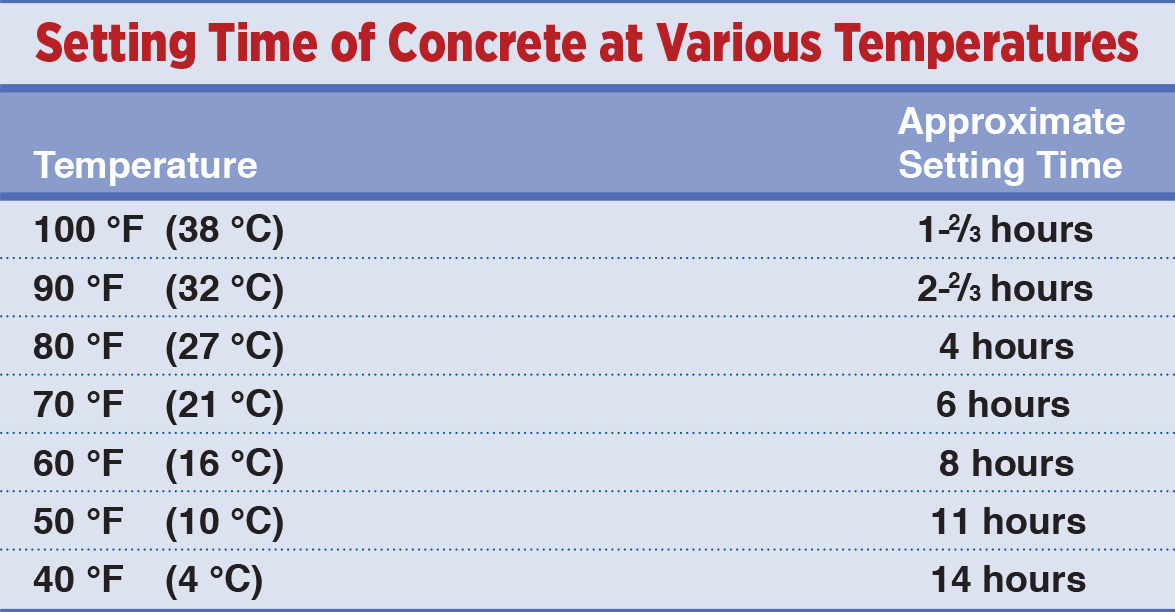
For high-early strength concrete that wont be exposed to freeze-thaw cycles one day at temperatures above 40 degrees is sufficient. At temperatures below 40 degrees Fahrenheit the initial curing process can take anywhere from two to 24 hours longer and when cold enough it can be stopped entirely. Mm 12 in. The ideal temperature to pour concrete is between 10C and 15C 50F and 60F. Pouring concrete in cold weather will have a detrimental affect on concrete.
 Source: in.pinterest.com
At the same time concrete poured in freezing temperatures can develop cracks as water in the mixture freezes and expands. For temperatures greater than 35C the use of ice-cold water is recommended to prevent formation of cracks at early stages. Maintain the concrete temperature above 40 degrees Fahrenheit for at least four more days after the use of the insulation blankets or heated enclosures. Others say a temperature higher than 90 ºF 32 ºC is allowable if the concrete contains a set-retarding admixture. The American Concrete Institute ACI ACI 306R-10 has stated that cold weather exists when the air temperature has fallen to or is expected to fall below 40F 5C during the protection period.
 Source: pinterest.com
The ideal temperature to pour concrete is between 10C and 15C 50F and 60F. Others say a temperature higher than 90 ºF 32 ºC is allowable if the concrete contains a set-retarding admixture. DONT let new concrete get too cold. But first lets step back and look at how temperature affects pouring concrete. The American Concrete Institute ACI ACI 306R-10 has stated that cold weather exists when the air temperature has fallen to or is expected to fall below 40F 5C during the protection period.
 Source: news.whitecap.com
What defines cold weather for concrete. When there is no other option adding a cement bag to the mix will help. Temperatures below 50F will begin to slow the curing process and the water in the cement is at risk of freezing at temperatures below 40F. Even when daytime temperatures are within the satisfactory range winter concrete setting creates risks that could result in weak inadequate concrete. 300 mm 12-36 in.
Source: quora.com
At the same time concrete poured in freezing temperatures can develop cracks as water in the mixture freezes and expands. 900-1800 mm 72 in. For most concrete structures the curing period at temperatures above 5º C 40º F should be a minimum of 7 days or until 70 of the specified compressive or flexural strength is attained. Between 40 and 60 allows the water to slowly evaporate from the concrete but is not cold enough to slow down the chemical process of curing. The American Concrete Institute ACI ACI 306R-10 has stated that cold weather exists when the air temperature has fallen to or is expected to fall below 40F 5C during the protection period.
This site is an open community for users to submit their favorite wallpapers on the internet, all images or pictures in this website are for personal wallpaper use only, it is stricly prohibited to use this wallpaper for commercial purposes, if you are the author and find this image is shared without your permission, please kindly raise a DMCA report to Us.
If you find this site adventageous, please support us by sharing this posts to your favorite social media accounts like Facebook, Instagram and so on or you can also save this blog page with the title minimum temperature to pour concrete slab by using Ctrl + D for devices a laptop with a Windows operating system or Command + D for laptops with an Apple operating system. If you use a smartphone, you can also use the drawer menu of the browser you are using. Whether it’s a Windows, Mac, iOS or Android operating system, you will still be able to bookmark this website.