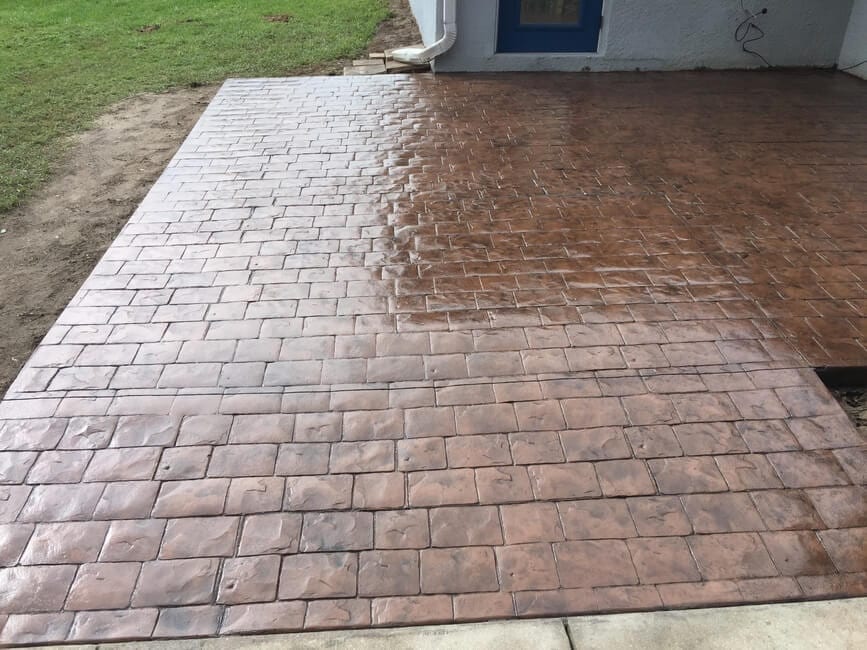
Your Sub base depth for concrete slab images are available in this site. Sub base depth for concrete slab are a topic that is being searched for and liked by netizens now. You can Find and Download the Sub base depth for concrete slab files here. Get all royalty-free photos and vectors.
If you’re looking for sub base depth for concrete slab pictures information connected with to the sub base depth for concrete slab interest, you have pay a visit to the ideal site. Our site always provides you with hints for viewing the maximum quality video and image content, please kindly search and find more enlightening video content and graphics that match your interests.
Sub Base Depth For Concrete Slab. Even if a concrete slab is being placed on top of a granite subgrade the lack of uniformity in the absence of a sub-base will pose several problems. If you want cars vans horses the public. Except for waffle raft slabs where the edge rebate is more than 150 mm in depth the width of the edge beam at the base of the rebate must not be less than 200 mm except that if R10 or N10 ties at 900 mm spacing or equivalent are provided to resist vertical forces the width of the edge beam at the base of the rebate can be reduced to 150 mm. You need to allow between 100 and 200mm for the depth of the concrete slab depth will depend on the load it is supporting plus a minimum of an additional 100mm for the sub base.
 Components Of Road Civil Engineering Construction Civil Engineering Road Construction From in.pinterest.com
Generally a flexible sub-base of unbound material needs to be at least 100mm deep as does a bound sub-base of CBMHBM. R896neo 6 Apr 2016. This trench will form the footings for your foundation and provide the support for the walls of your building. Long timber straight edge - for ensuring your sub-base is level 2 - 22millimetre mm timber or dowel off-cuts - used to make spacers for joints Off-cut piece of timber - to protect the slab when laying Tools Tape measure Large builders square - also known as a folding square Builders line - for marking out the site. Cutting pavingAngle GrindersIf youcuttingdoonedocuttingone. It includes lots of fines and we compact it to 98.
If so no concrete is needed but it needs to be about 12 10mm below the thickness of the combined mortar bed and flags if that makes sense.
This trench will form the footings for your foundation and provide the support for the walls of your building. If so no concrete is needed but it needs to be about 12 10mm below the thickness of the combined mortar bed and flags if that makes sense. Place pegs at regular intervals to mark out the ultimate height of the finished concrete using a spirit level to keep the top of each peg level. You need to allow between 100 and 200mm for the depth of the concrete slab depth will depend on the load it is supporting plus a minimum of an additional 100mm for the sub base. Moreover because the drying and cooling rates at the top and bottom of the slab will never be the same the shrinkage will vary. For strip footings this is generally to undisturbed solid ground while for individual footings and floor slabs you will need to allow enough depth for your sub base 100mm and damp-proof membrane dpm as well as the concrete itself.
 Source: pinterest.com
The thickness of the concrete - 125mm 5 inches for family sized car or 150mm 6 inches for light vans etc. Moreover because the drying and cooling rates at the top and bottom of the slab will never be the same the shrinkage will vary. In addition to uniformity the surface shrinking also presents a grave problem. Heres how to lay a patio in 6 easy. Place pegs at regular intervals to mark out the ultimate height of the finished concrete using a spirit level to keep the top of each peg level.
 Source: pinterest.com
For bitumen-bound material then 50mm is a typical minimum thickness. Even if a concrete slab is being placed on top of a granite subgrade the lack of uniformity in the absence of a sub-base will pose several problems. Base thicknesses in the range of 4 to 6 inches are most common. It includes lots of fines and we compact it to 98. The slope of the concrete - 1 in 40 25mm in 1 metre 1in in 3 ft for driveways 1 in 60.
 Source: pinterest.com
This trench will form the footings for your foundation and provide the support for the walls of your building. Pouring a slab foundation Inside the strings dig a trench 18 wide and at least 2 deep in colder climates you need to go down deeper to get below the frost line usually 3 to 4 feet. The thickness of the concrete - 125mm 5 inches for family sized car or 150mm 6 inches for light vans etc. Most road base material approved by the local DOT is suitable for the subbase. Youd be much better having 125mm of concrete with no hardcore than having 50mm of hardcore and 75mm of concrete.
 Source: pinterest.com
Granular A can be used instead of Granular B. Except for waffle raft slabs where the edge rebate is more than 150 mm in depth the width of the edge beam at the base of the rebate must not be less than 200 mm except that if R10 or N10 ties at 900 mm spacing or equivalent are provided to resist vertical forces the width of the edge beam at the base of the rebate can be reduced to 150 mm. The most common sub-base material is DT Type 1 MOT which consists of crushed rock graded from 40mm down to dust. The thickness of the sub-base - 150mm 6 inches. It includes lots of fines and we compact it to 98.
 Source: in.pinterest.com
Except for waffle raft slabs where the edge rebate is more than 150 mm in depth the width of the edge beam at the base of the rebate must not be less than 200 mm except that if R10 or N10 ties at 900 mm spacing or equivalent are provided to resist vertical forces the width of the edge beam at the base of the rebate can be reduced to 150 mm. This trench will form the footings for your foundation and provide the support for the walls of your building. Insulation and screed on top of that. Can You Cut Paving Slabs With An Angle Grinder. My spec was 150mm compacted sub base with a 100mm concrete floor covering.
 Source: pinterest.com
For sticky clay it is advisable to go deeper but for freer-draining more stable sub-grades such as chalk or sandy soil a general rule for a Type 1 sub-base could be as follows. There will be a blinging layer of sand to protect the tanking membrane. If you want cars vans horses the public. To do this fill the bottom of your patio area with the sub-base and rake to an even depth of 50mm then compact you can do this by just walking over it ensuring that you cover the entire area twice. This is done to ensure there is minimal risk of settlement once the completed pavement is opened to traffic pedestrian or vehicular.
 Source: pinterest.com
The k value used for floor slab design reflects the response of the sub-grade under temporary elastic conditions and small deflections usually 005 inches or less. Where a sub-base needs to be greater than 150mm in depth it should be built-up as a series of layers each being 150mm or less and thoroughly compacted before placing levelling and compacting the next. Even if a concrete slab is being placed on top of a granite subgrade the lack of uniformity in the absence of a sub-base will pose several problems. Cutting pavingAngle GrindersIf youcuttingdoonedocuttingone. If you want cars vans horses the public.
Source: in.pinterest.com
Cutting pavingAngle GrindersIf youcuttingdoonedocuttingone. The thickness of the concrete - 125mm 5 inches for family sized car or 150mm 6 inches for light vans etc. Theres a rule of thumb that we use with fill layers - they should always be at least twice the thickness of the largest particle size. To do this fill the bottom of your patio area with the sub-base and rake to an even depth of 50mm then compact you can do this by just walking over it ensuring that you cover the entire area twice. Pouring a slab foundation Inside the strings dig a trench 18 wide and at least 2 deep in colder climates you need to go down deeper to get below the frost line usually 3 to 4 feet.
 Source: pinterest.com
For strip footings this is generally to undisturbed solid ground while for individual footings and floor slabs you will need to allow enough depth for your sub base 100mm and damp-proof membrane dpm as well as the concrete itself. Then dig your foundations to the required depth. Posted July 3 2020 Weve just done 200mm compacted type 3 under the main slab and 100mm under the load bearing walls to bear 200mm and 300mm of concrete slab. Moreover because the drying and cooling rates at the top and bottom of the slab will never be the same the shrinkage will vary. 75mm of concrete is not enough.
 Source: pinterest.com
If so no concrete is needed but it needs to be about 12 10mm below the thickness of the combined mortar bed and flags if that makes sense. And sub-base within the pavement structure. Etc then concrete is the way to go. If so no concrete is needed but it needs to be about 12 10mm below the thickness of the combined mortar bed and flags if that makes sense. 127 Granular C dense graded virgin or recycled aggregates intended for use as base and sub-base.
 Source: co.pinterest.com
This is done to ensure there is minimal risk of settlement once the completed pavement is opened to traffic pedestrian or vehicular. Granular A can be used instead of Granular B. The depth of the sub-base will depend on the size of vehicles using the drive with a typical domestic construction requiring a minimum depth of 100mm but preferably 150mm to be able to take cars. Where a sub-base needs to be greater than 150mm in depth it should be built-up as a series of layers each being 150mm or less and thoroughly compacted before placing levelling and compacting the next. 126 Granular B well-graded virgin or recycled aggregates intended for use as base and sub-base within the pavement structure.
 Source: pinterest.com
This phenomenon will continue as long as any water heat or both is being released to the surroundings. The thickness of the sub-base - 150mm 6 inches. My spec was 150mm compacted sub base with a 100mm concrete floor covering. The thickness of the base generally depends on the degree of support required for the construction equipment and type and condition of the underlying subgrade. Light Duty pedestrian patio or garden path 100mm to 150mm Medium Duty driveway for cars or vans not exceeding 75 tons 150mm min.
 Source: in.pinterest.com
We will not use 57 stone thats like trying to place a slab on marbles. You need to allow between 100 and 200mm for the depth of the concrete slab depth will depend on the load it is supporting plus a minimum of an additional 100mm for the sub base. And sub-base within the pavement structure. Long timber straight edge - for ensuring your sub-base is level 2 - 22millimetre mm timber or dowel off-cuts - used to make spacers for joints Off-cut piece of timber - to protect the slab when laying Tools Tape measure Large builders square - also known as a folding square Builders line - for marking out the site. Generally a flexible sub-base of unbound material needs to be at least 100mm deep as does a bound sub-base of CBMHBM.
 Source: pinterest.com
This phenomenon will continue as long as any water heat or both is being released to the surroundings. As long as you are allowing 25-50mm for your full bed of cement or 65-90mm in this case from your final finished height as you have a 40mm thick slab top up any areas below 50mm and re whacker and reduce any areas above 25mm as you want a minimum bed of 25mm everywhere and re whack the disturbed area. It includes lots of fines and we compact it to 98. Where a sub-base needs to be greater than 150mm in depth it should be built-up as a series of layers each being 150mm or less and thoroughly compacted before placing levelling and compacting the next. There will be a blinging layer of sand to protect the tanking membrane.
 Source: pinterest.com
For instance it is harder to obtain a proper grade and an optimal flat structure without a thoroughly prepared sub-base. Base thicknesses in the range of 4 to 6 inches are most common. If so no concrete is needed but it needs to be about 12 10mm below the thickness of the combined mortar bed and flags if that makes sense. For strip footings this is generally to undisturbed solid ground while for individual footings and floor slabs you will need to allow enough depth for your sub base 100mm and damp-proof membrane dpm as well as the concrete itself. Theres a rule of thumb that we use with fill layers - they should always be at least twice the thickness of the largest particle size.
 Source: pinterest.com
Moreover because the drying and cooling rates at the top and bottom of the slab will never be the same the shrinkage will vary. Where a sub-base needs to be greater than 150mm in depth it should be built-up as a series of layers each being 150mm or less and thoroughly compacted before placing levelling and compacting the next. As long as you are allowing 25-50mm for your full bed of cement or 65-90mm in this case from your final finished height as you have a 40mm thick slab top up any areas below 50mm and re whacker and reduce any areas above 25mm as you want a minimum bed of 25mm everywhere and re whack the disturbed area. If you want cars vans horses the public. In addition to uniformity the surface shrinking also presents a grave problem.
 Source: pinterest.com
The most common sub-base material is DT Type 1 MOT which consists of crushed rock graded from 40mm down to dust. The most common sub-base material is DT Type 1 MOT which consists of crushed rock graded from 40mm down to dust. It includes lots of fines and we compact it to 98. The k value used for floor slab design reflects the response of the sub-grade under temporary elastic conditions and small deflections usually 005 inches or less. This phenomenon will continue as long as any water heat or both is being released to the surroundings.
 Source: pinterest.com
This phenomenon will continue as long as any water heat or both is being released to the surroundings. Cutting pavingAngle GrindersIf youcuttingdoonedocuttingone. This phenomenon will continue as long as any water heat or both is being released to the surroundings. R896neo 6 Apr 2016. The depth of the sub-base will depend on the size of vehicles using the drive with a typical domestic construction requiring a minimum depth of 100mm but preferably 150mm to be able to take cars.
This site is an open community for users to submit their favorite wallpapers on the internet, all images or pictures in this website are for personal wallpaper use only, it is stricly prohibited to use this wallpaper for commercial purposes, if you are the author and find this image is shared without your permission, please kindly raise a DMCA report to Us.
If you find this site convienient, please support us by sharing this posts to your preference social media accounts like Facebook, Instagram and so on or you can also bookmark this blog page with the title sub base depth for concrete slab by using Ctrl + D for devices a laptop with a Windows operating system or Command + D for laptops with an Apple operating system. If you use a smartphone, you can also use the drawer menu of the browser you are using. Whether it’s a Windows, Mac, iOS or Android operating system, you will still be able to bookmark this website.